Why Civil Society Groups Are Demanding Greater Transparency in Nigeria’s Budget Process
A national budget is supposed to be more than a spreadsheet of numbers—it is a blueprint for how public funds improve everyday life. Yet for many Nigerians, the gap between budget figures on paper and real-world impact remains wide.
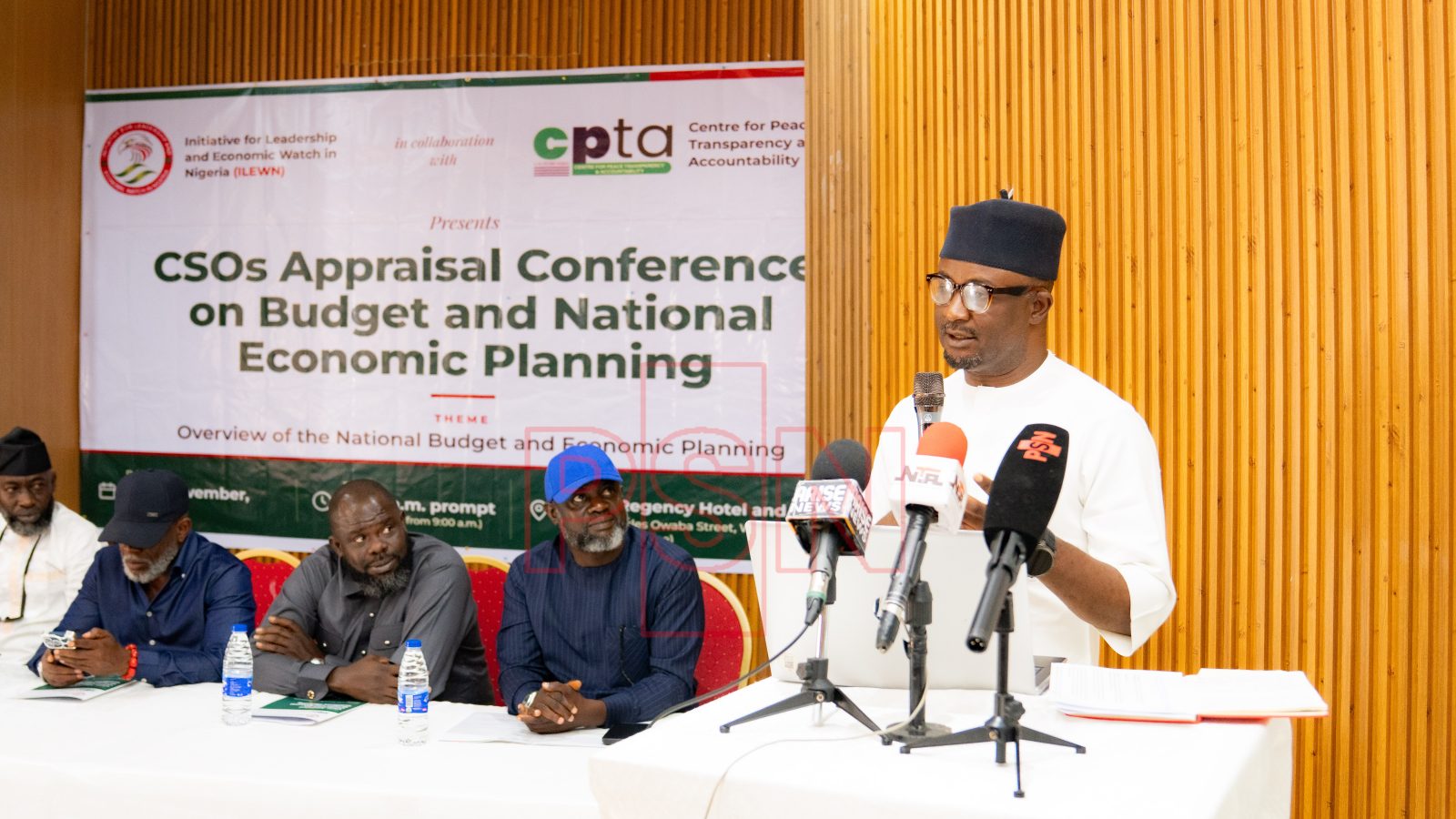
That concern was front and center at the CSOs Appraisal Conference on Budget and National Economic Planning, held in Abuja on Friday. Organised by the Initiative for Leadership and Economic Watch in Nigeria (ILEWN) in partnership with the Centre for Peace, Transparency and Accountability (CPTA), the gathering brought civil society leaders together to push for stronger citizen involvement, clearer accountability, and better implementation of national budgets.
Closing the Gap Between Budgets and Citizens
Speaking at the event, Amb. Splendour Agbonkpolor, Executive Director of ILEWN, emphasised that a budget reflects national priorities and directly shapes access to essential public services and citizen welfare.
According to Agbonkpolor, the budget process has often felt disconnected from ordinary people. He noted that the conference was designed to equip Civil Society Organisations (CSOs) to:
- Participate more meaningfully in budget and economic planning
- Monitor how approved funds are actually spent
- Influence public financial management toward greater transparency and inclusion
He urged participants to come up with practical solutions to ease pressing economic hardships—including the rising cost of living—and strengthen accountability in how public resources are handled.
Oversight Must Go Beyond Approval
Echoing that message, Comrade Patrick Ogheneyero, Executive Director of CPTA, pointed out that a national budget signals government policy direction and commitment to improving lives.
However, he stressed that civil society’s role shouldn’t stop once a budget is drafted or passed. True accountability requires implementation, monitoring, and evaluation, so that approved allocations translate into tangible results for Nigerians.
Ogheneyero encouraged CSOs to use insights from the conference to sharpen their advocacy, ask tough questions, collaborate constructively with institutions, and hold agencies responsible for how public money is managed.
Tackling Budget Non-Implementation
The issue of unimplemented budgets also drew sharp attention from Comrade Okpanachi Jacob, Convener of the Social Transparency and Youth Leadership Advancement Initiative (STYLAI).
Jacob warned that repeated non-implementation across budget cycles hurts both public service delivery and the long-term prospects of current and future generations. He called for sustained conversations around national economic planning to generate actionable ideas that support long-term development.
The Bigger Picture
As conversations around economic recovery and public accountability continue, voices from civil society are making one point clear: passing a budget is only half the story. Without transparent execution, citizen engagement, and consistent follow-through, even well-intentioned plans risk falling short on the ground.